An iOS app that quietly runs the household
A native iOS app I designed and built from the ground up — it learns a household, generates a fair chore schedule, adapts as life changes, and makes the whole thing feel warm instead of administrative.
The app’s whole premise, in its own words.
Your home has a plan.
The job nobody holds
Running a home is a full-time job nobody actually holds — the quiet mental load of who does what, when, and whether it’s fair. Handled is a native iOS app I designed and built to hold that job: it learns your household, builds a fair chore schedule, and adapts when life changes — all in a way that feels warm rather than administrative. Its whole premise fits on a line: your home has a plan.
Fair is hard to compute
Chore apps usually fail one of two ways: they’re cold checklists that feel like a manager handing out tasks, or they’re so fiddly that keeping them current becomes its own chore. The real problem underneath is fairness — the felt sense that the load is actually shared — and fairness is surprisingly hard to compute and even harder to make feel human.
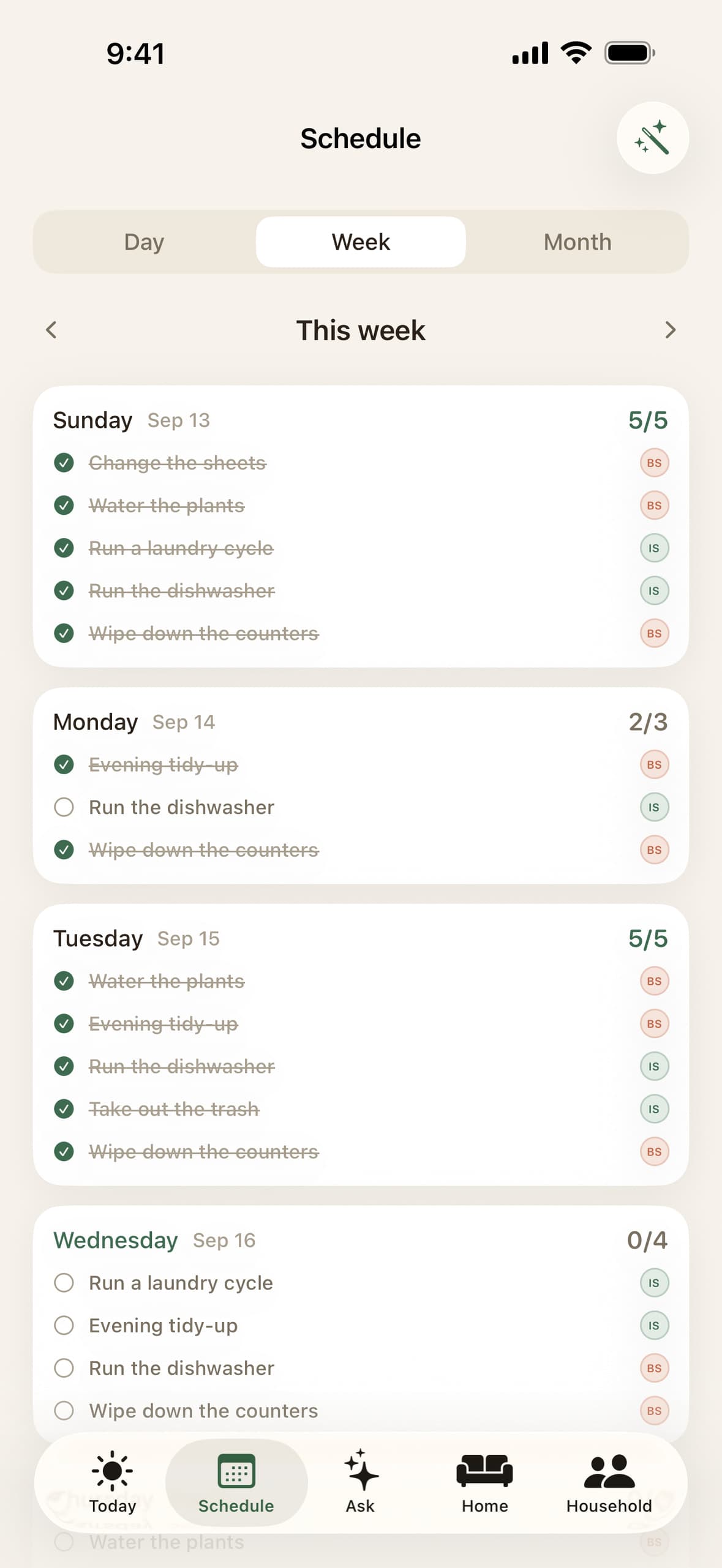
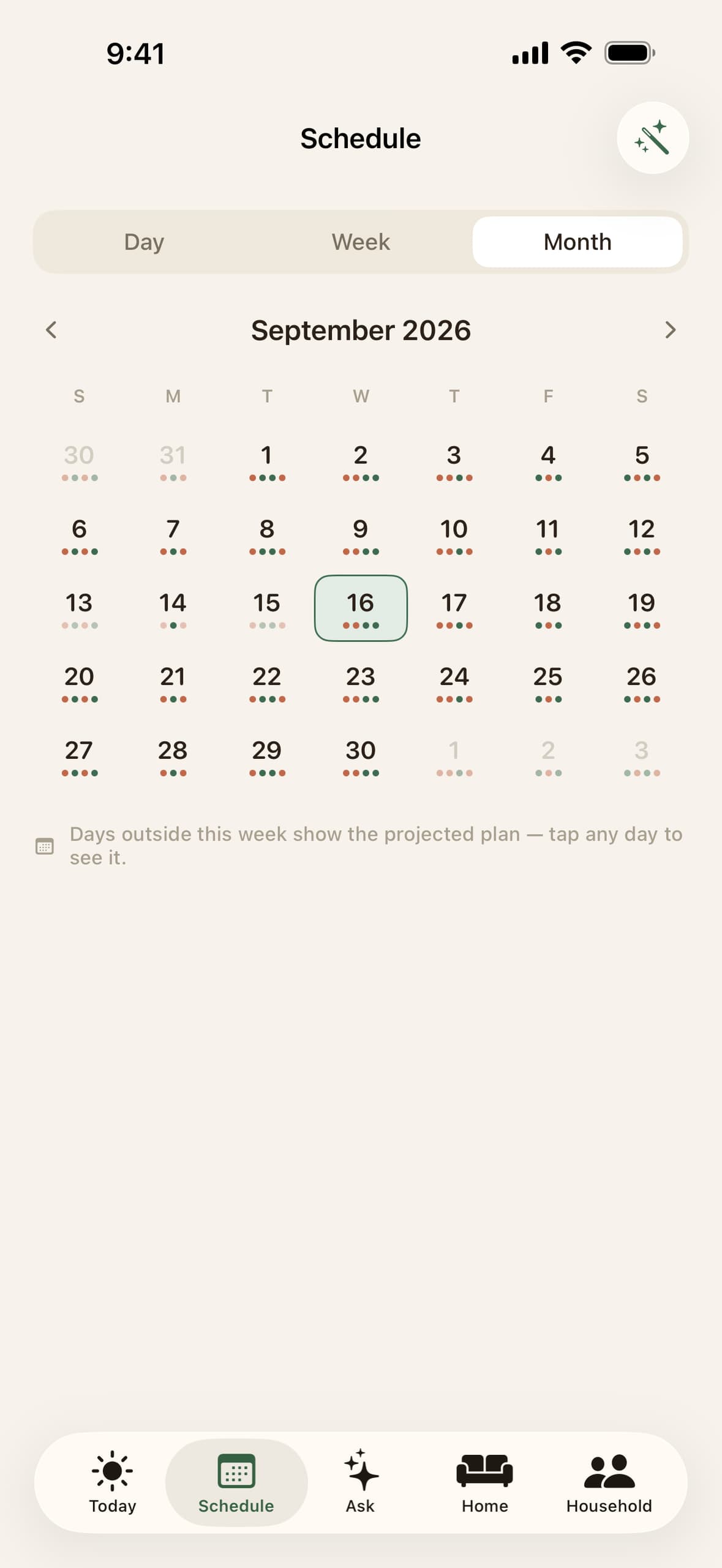
The week, and the month it projects.
A plan that bends
Treat the home like a system with a plan. A fairness engine accounts for real effort and proposes rebalances; a scheduling engine turns recurring chores into a concrete week that adapts when things slip (a guilt-free “catching up,” never a wall of red). Notifications run on a strict anti-nag ceiling. And an AI layer — “Ask Home” — lets anyone ask the household a question in plain language and get a grounded answer.
Under the hood
Eight services behind protocols, over pure, unit-tested domain logic. A backend hiccup degrades to a deterministic plan, never a dead screen.
- SchedulingTurns recurring chores into a concrete week that adapts when things slip.
- FairnessAccounts for real effort and proposes rebalances.
- AIPlan generation and Ask Home, fronting the Claude API.
- NotificationsA reminder ladder with a hard anti-nag ceiling.
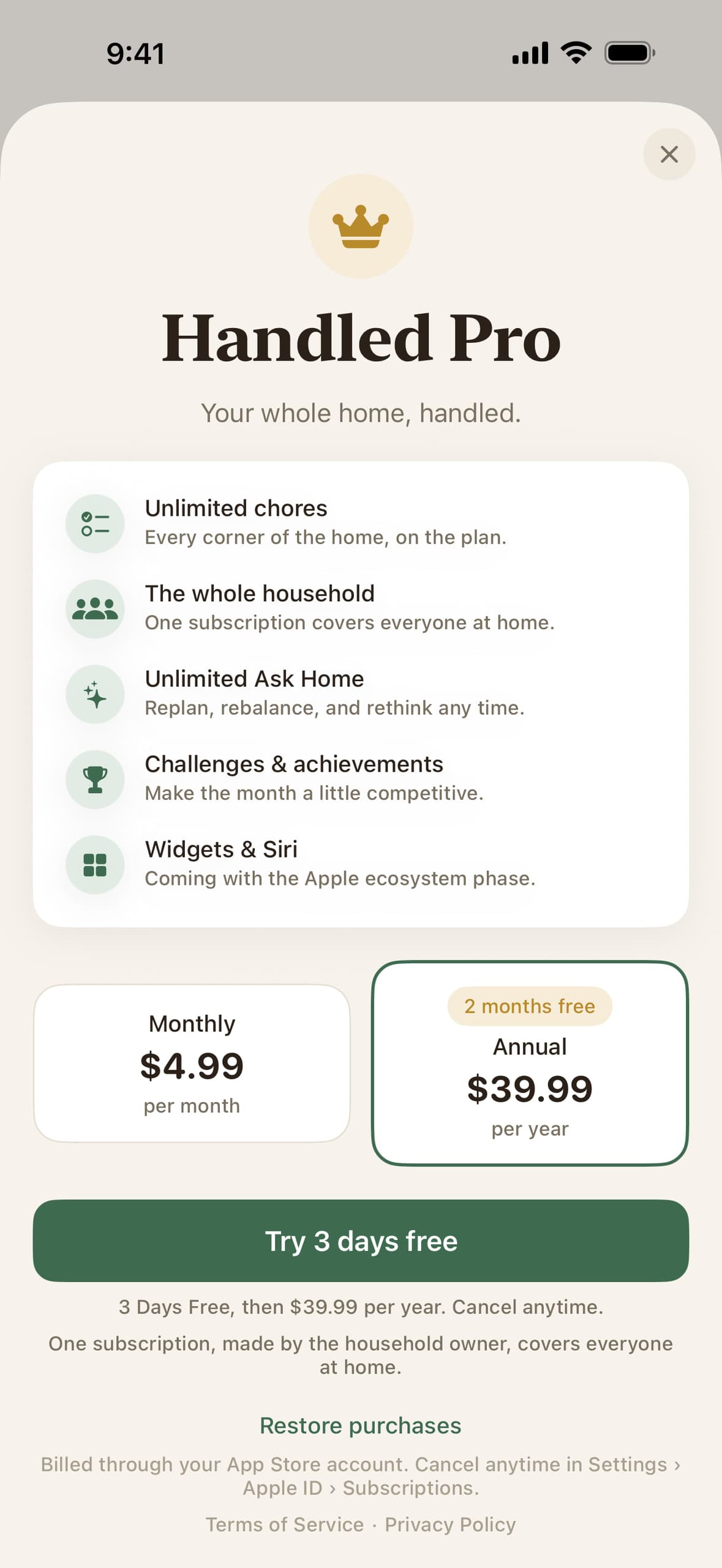
- SubscriptionsStoreKit, with Handled Pro.
- PersistenceLocal-first, with iCloud sync and household sharing.
- WeatherContext for outdoor chores.
- AnalyticsHow the household’s plan is actually going.
Linen, fern, clay, honey
Sampled from the app. Fern is the brand; clay and honey tint the members of a household.
- Fern#38664a
- Linen#f7ecd7
- Clay#c4755a
- Honey#b88a2a
- Blush#eed4c9
Warm, not administrative
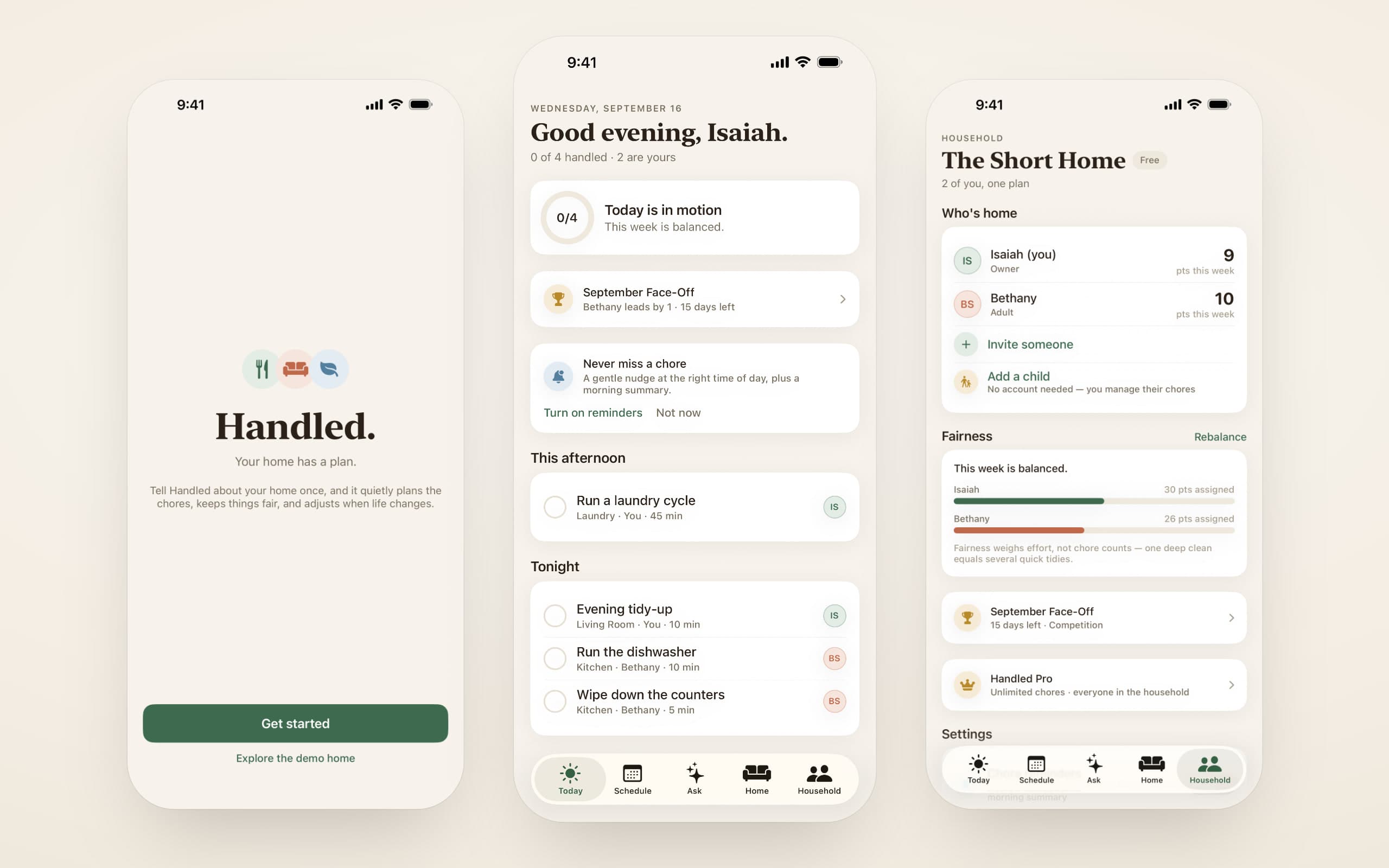
Warm, calm, and specifically human. Linen surfaces, a deep fern-green brand color, member tints in clay and honey, serif display type for the human moments (“Good evening, Isaiah”) and rounded numerals for the stats. Copy is calm and concrete — “Tonight · Isaiah,” never system-speak. Dark mode is a first-class design, not an inversion.
One system, every screen
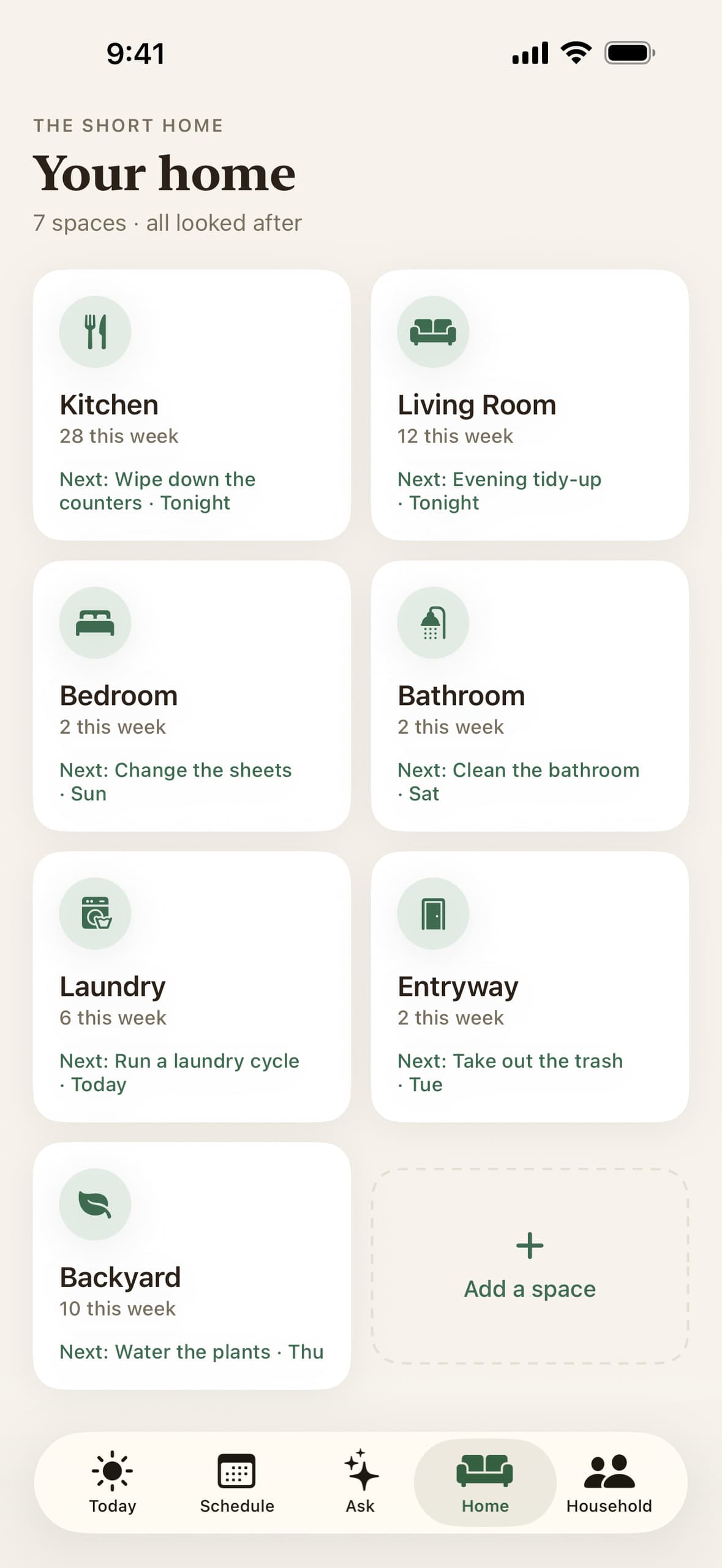
A full iOS design system — color, type, and spacing tokens plus a reusable component kit of cards, chips, avatars, progress rings, and empty states — so every screen (Today, Schedule, Home, Room Detail, Ask Home, Household, Challenge, Onboarding, Paywall) reads as one product. Raw values live in a single tokens layer; screens never hardcode.
Built for a thumb and a glance
As a phone-first app, every screen is built for a thumb and a glance: the day’s plan the moment you open it, one tap to mark a chore done, and a layout that holds up in both light and dark. Dark mode is designed alongside light, token for token — not inverted after the fact.
- Handled
- 2026
- Product, design system, engineering
- SwiftUI
- iPhone
Victory Church
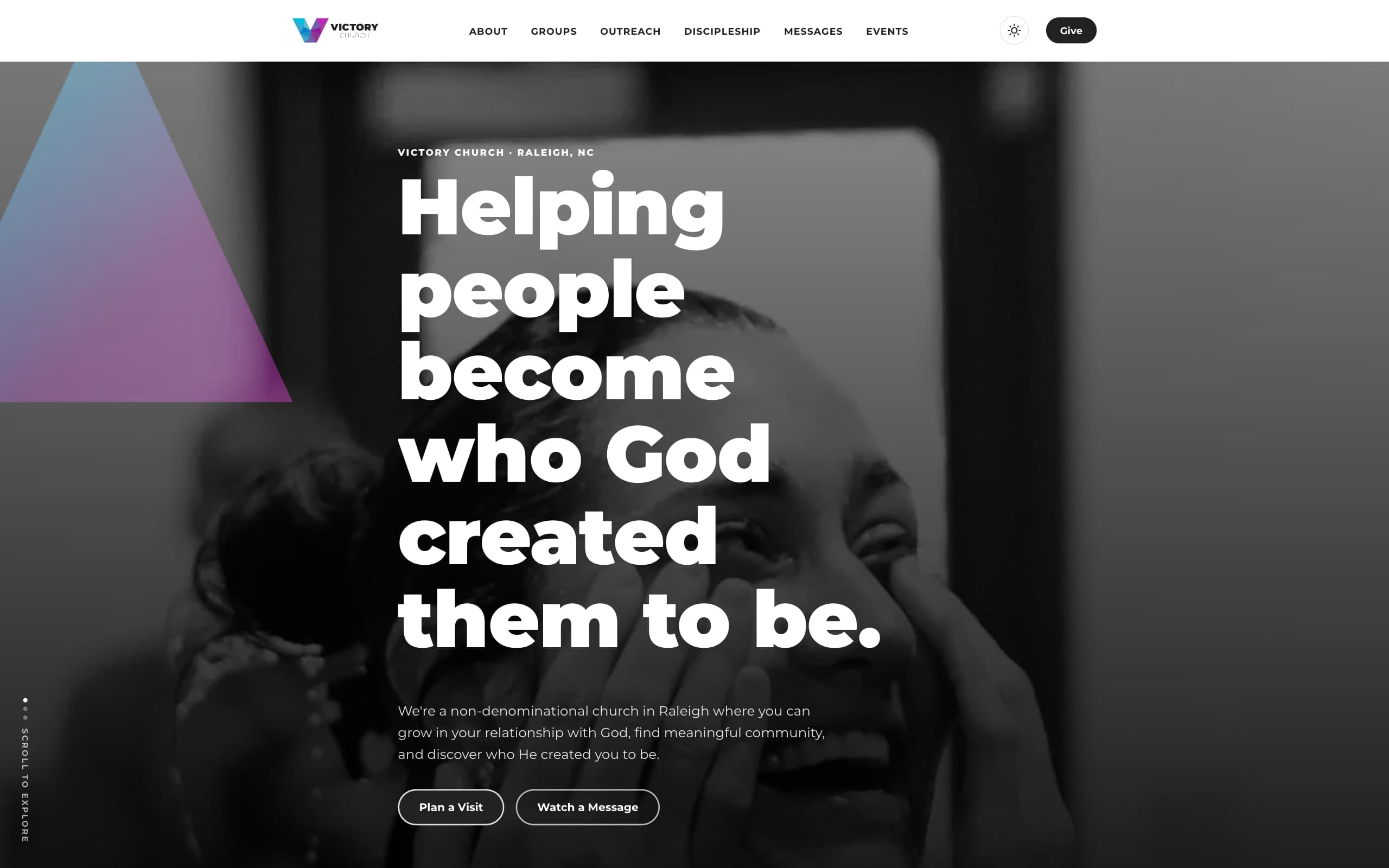
A custom website and brand identity for a non-denominational church in Raleigh: I helped develop the logo, colors and brand, then designed and built a site that helps first-time guests know exactly what to expect.